
Imagine a world where players truly own their in-game assets, trading them like baseball cards and cashing in on their gaming skills. Welcome to the revolution of blockchain in gaming, where pixels meet profit and every victory can be a ticket to the digital gold rush.
Overview of Blockchain Technology
Blockchain technology serves as a decentralized digital ledger, recording transactions across multiple computers in a secure manner. It enables transparency and accountability, ensuring that all participants in the network can view and verify transactions without relying on a central authority. Each block in a blockchain contains a list of transactions and is linked to the previous block, creating an unchangeable chain. This structure enhances security, as altering any single block would require changing all subsequent blocks.
In gaming, blockchain introduces the concept of true ownership of digital assets. Players can buy, sell, and trade in-game items as non-fungible tokens (NFTs), providing them with a tangible asset that can potentially increase in value. Developers can create unique in-game items on the blockchain, allowing players to authenticate their ownership and rarity. This innovation sets the stage for a digital marketplace where gamers monetize their skills and achievements.
Additionally, blockchain enhances player engagement through decentralized finance (DeFi) mechanisms. Players can earn rewards through participation in games or contribute to the ecosystem by staking tokens. This creates an interactive experience, making gaming more than just a leisure activity.
Smart contracts, another feature of blockchain, automate and enforce agreements between parties. In gaming, they can facilitate transactions without intermediaries, streamlining processes and reducing costs. These contracts execute automatically when predefined conditions are met, providing a fair environment for all players.
The implementation of blockchain in gaming signifies a shift towards player-centric models. By empowering gamers with real ownership of their assets and leveraging transparent systems, blockchain technology transforms gaming into an inclusive digital economy.
The Impact of Blockchain in Gaming
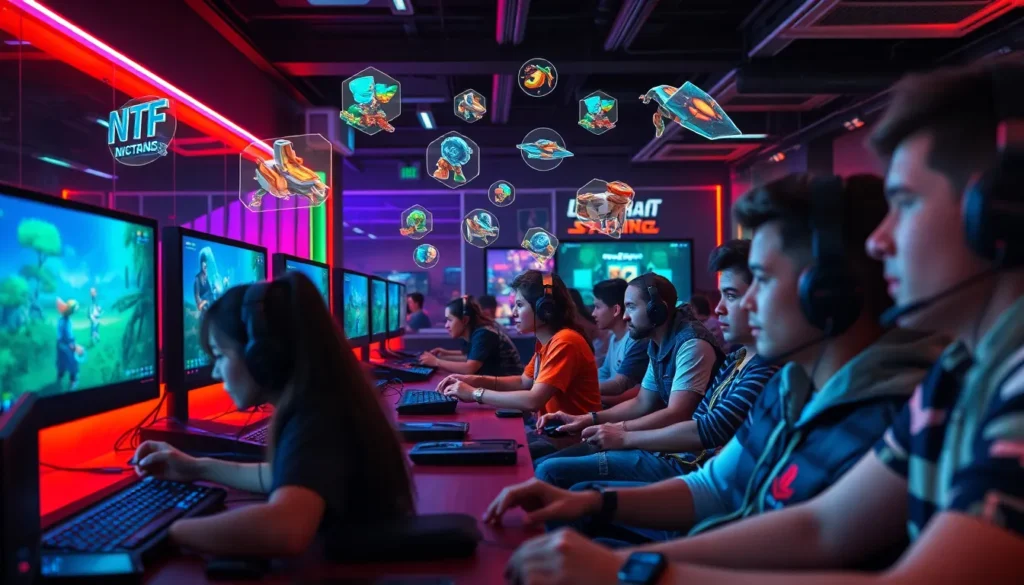
Blockchain technology significantly alters the gaming landscape, fostering new opportunities for players and developers alike.
Enhanced Security and Transparency
Security improvements stem directly from blockchain’s decentralized nature. Players benefit from reduced risks of fraud and hacking, as every transaction gets recorded on a public ledger. Blockchain’s transparency ensures that players can verify the authenticity and history of in-game assets. Developers can create a trustless environment where players feel safe to trade and invest. Additionally, the immutable records act as a safeguard against unauthorized alterations, enhancing overall game integrity. These features streamline processes while cultivating trust between players and developers.
Ownership and Provenance of In-Game Assets
True ownership of in-game assets emerges through blockchain technology. Players acquire digital items as non-fungible tokens (NFTs), allowing them to prove possession unequivocally. Provenance tracking offers insight into an asset’s history, revealing previous owners and transaction details. Unique digital items can appreciate in value, giving players the potential for financial gain. Developers gain flexibility in crafting more customizable and game-specific assets, tailoring them to community desires. The ability to freely buy, sell, or trade in-game items fosters a vibrant player-driven market. This evolution marks a significant shift towards empowering gamers and enhancing their gaming experiences.
Benefits of Blockchain in Gaming
Blockchain technology offers significant advantages in the gaming sector. Key benefits include decentralized game economies and enhanced player engagement.
Decentralized Game Economies
Decentralized economies empower players by enabling true ownership of in-game assets. Players can trade items as non-fungible tokens (NFTs), creating a marketplace where values fluctuate based on demand. Developers design unique virtual goods with scarcity, impacting their worth. This shift encourages player-driven initiatives, with communities influencing asset creation and pricing. As a result, decentralized economies provide transparency and facilitate seamless transactions, allowing players to monetize their skills effectively while contributing to a more vibrant gaming landscape.
Improved Player Engagement and Trust
Blockchain enhances player engagement through its transparent and secure framework. Players feel reassured knowing every transaction is recorded on a public ledger, which verifies asset authenticity. Trust flourishes as players establish ownership of digital items, reducing fears of fraud or hacking incidents. Smart contracts automate transactions, minimizing delays and ensuring fairness in exchanges. By fostering an environment of trust, blockchain encourages players to invest time and resources into games, enhancing their overall experience and promoting active participation in the gaming community.
Challenges and Limitations
Blockchain in gaming faces several challenges that impact its adoption and efficiency. Scalability issues pose significant barriers, particularly due to network congestion during peak usage. Many games experience slow transaction speeds when large numbers of players engage simultaneously. Developers often grapple with ensuring that the blockchain infrastructure can process thousands of transactions in real-time, which is essential for a smooth gaming experience.
Regulatory concerns also create challenges for blockchain gaming. Governments around the world are still figuring out how to classify and regulate digital currencies and NFTs. Inconsistent regulations can stifle innovation, making developers hesitant to invest in blockchain technology. Compliance with anti-money laundering and consumer protection laws complicates the creation of decentralized platforms. Addressing these concerns is crucial for making blockchain gaming more mainstream and operationally viable.
Future Prospects of Blockchain in Gaming
Innovations in blockchain technology continue to reshape the gaming landscape. Enhanced player ownership of in-game assets serves as a key driver for future advancements. NFT marketplaces will likely expand, offering unique digital collectibles that appreciate in value.
Developers can create engaging ecosystems that benefit both players and creators. Other industries may influence blockchain gaming, leading to collaborations that introduce hybrid experiences. Increased interoperability between games can promote the sharing of assets, enhancing their perceived value.
Future iterations of blockchain may address scalability concerns. Solutions like Layer 2 protocols have the potential to improve transaction speeds significantly. Players can enjoy seamless experiences even during peak activity periods.
Regulatory frameworks will also evolve, promoting innovation without stifling creativity. Developers can operate within clearer guidelines that support digital currencies and NFTs while ensuring consumer protection. Greater adoption among traditional gaming companies may follow, as they recognize the benefits of integrating blockchain technology.
The integration of decentralized finance (DeFi) mechanisms will likely foster novel monetization models. Gamers may earn tokens through gameplay, which can then be reinvested into the ecosystem. This not only incentivizes participation but also creates self-sustaining game economies.
Increased focus on security will enhance trust in blockchain gaming. Players will benefit from advanced encryption and transparent transaction histories, reducing fears of fraud or hacking. Immutable records will continue to safeguard the integrity of in-game assets.
Lastly, community-driven initiatives are expected to flourish as players engage more actively. Gamers will influence the development of new features or items, shaping a vibrant market that rewards creativity and collaboration. Overall, the future of blockchain in gaming promises exciting possibilities for players and developers alike.
The integration of blockchain technology in gaming is revolutionizing how players interact with their digital assets. With true ownership and the ability to monetize skills, gamers are entering a new era where their achievements translate into tangible value.
As the landscape evolves, challenges like scalability and regulatory hurdles will need to be addressed. However, ongoing innovations and community engagement are set to enhance player experiences and foster a vibrant marketplace.
The future holds immense potential for both players and developers as they navigate this exciting frontier. Blockchain is not just a trend; it’s reshaping the gaming industry in profound ways.


